
Sales forecasts are useful for tracking whether you’re going to hit your number. But they don’t tell you why you missed it – or what your team should do differently in the next set of deals.
For the people responsible for performance – sales leaders – that’s the frustrating part. You can’t coach a forecast. You can only coach behavior. But only if you can see what’s really happening in the conversations between your buyers and sellers.
That’s why buyer feedback is one of the most underrated components of modern sales enablement. Not because it’s trendy. Because it’s corrective.
Buyer feedback turns hindsight into a forward-looking performance management system.
The Sales Performance Blind Spot
When a deal is marked as lost in your CRM, the story usually comes from the rep. Sometimes it’s accurate. More often, it’s incomplete.
In fact, across win-loss data from over 150,000 B2B deals, we found that sellers and buyers cite different reasons for losing 50% to 70% of the time. Think about what that means operationally. If you’re diagnosing performance gaps using only your sellers’ opinions, you’re going to place smart bets on the wrong problems. Buyers confirm the cost of getting it wrong.
In our buyer feedback analyses, buyers report that more than half of lost deals were winnable if sellers had avoided fixable missteps during the sales experience.
That should change how you interpret, “We lost on price” or “They went with the incumbent.” Those can be true and still be an incomplete explanation.
The real enablement question isn’t “What did the rep think happened?” It’s “What did the buyer experience – and what did they need that we didn’t get right?”
Buyer Feedback as Performance Data
Most organizations treat buyer feedback like a periodic win-loss project: gather some interviews, summarize themes, hold a meeting, file it away.
But feedback becomes far more powerful when you treat it as regular input for sales enablement and coaching – the same way you treat pipeline coverage or conversion rates.
Here’s one data point that’s hard to ignore: In an analysis of 6,984 B2B deals, sellers who received buyer feedback achieved 40% better win rates year-over-year compared to sellers who did not.
Even more instructive is how much feedback it takes to see impact.
When sellers received feedback from only two deals, their win rates dropped year over year. But when sellers received feedback from three deals, performance improved.
Three deals became the threshold – enough signal to learn from, without so much noise that it gets ignored. After that, performance gains began to level off. More feedback didn’t automatically translate into better outcomes.
That’s a useful design principle for sales leaders. You don’t need a mountain of feedback to change outcomes. You only need a small number of clear, comparable data points to see a pattern of performance gaps.
Turn Feedback into a Performance Plan
Buyer feedback only becomes actionable if you translate it into sales behaviors you can coach.
That’s where many organizations stumble. They might collect feedback, but they don’t have a consistent framework for interpreting it, so the output becomes a list of themes – interesting, but easy to interpret 10 different ways.
When different managers draw different conclusions from the same feedback, coaching becomes inconsistent, and reps get mixed signals about what “good” looks like.
A better approach is to map feedback to the specific “make-or-break moments” buyers evaluate during the sales process.
Based on our analysis, there’s a specific set of sales competencies that show up consistently as the moments that predict wins and losses. We call it the Great 8 Sales Competency
Framework – an evidence-backed collection of observable behaviors and capabilities that buyers reward in the sales process:
- Align solutions to needs.
- Make a case for change.
- Demonstrate clear differentiation.
- Articulate meaningful value.
- Help justify decisions.
- Negotiate creatively.
- Resolve concerns responsively.
- Deliver compelling communications.
What’s striking is how often organizations miss these predictive competencies in favor of more generic skills.
For example, buyer feedback shows that “make a case for change” is 31.6% more predictive than measuring “industry knowledge,” and “align solutions to needs” is 21.9% more predictive than measuring “product knowledge.”
Buyers reward the sales skills that help them make better decisions.
If you want better win rates, don’t start with generic soft skills and hope your training lands. Pinpoint the few buyer-relevant behaviors that are impacting win rates, and then coach to those behaviors with precision.
How to Put Buyer Feedback to Work
This is where “sales enablement” often drifts into “sales activity.” Lots of motion. Lots of assets. But not nearly enough behavior change.
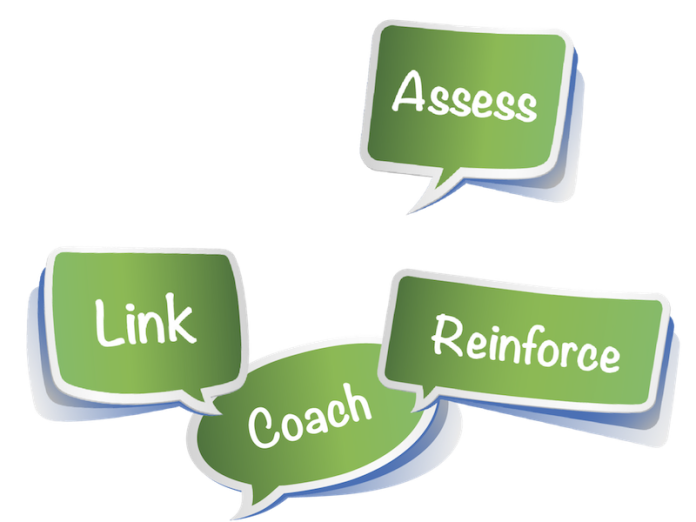
If you want to use buyer feedback to improve sales performance, use a simple loop that managers can run without turning it into a second job:
- Collect feedback routinely from closed deals (won, lost and no-decision).
- Assess performance at the rep level to see which competencies are consistently weak.
- Link those assessment scores to win/loss
- Coach to one or two behaviors that need to
- Reinforce in deal reviews: look for those behaviors as the deal unfolds.
- Re-check with fresh feedback to see how buyer perceptions
Companies rarely fall short on step one. They typically collect feedback and stop. Or they run training and skip reinforcement. Or they coach but never re-check whether buyers experienced improvement. But you can only improve performance if you follow every step in the process.
If you want a simple starting point, run this loop on three closed deals per rep each quarter. That’s enough volume to spot patterns, set a shared definition of what “good” looks like, and keep coaching consistent across managers.
That way, you connect insight to action – and action to outcomes.
And, of course, Re-check!
Feedback Becomes the New Forecast
Forecasting is about predicting outcomes. Feedback is about improving them.
For sales leaders trying to improve performance, that’s the point. You can use buyer feedback to get an unobstructed view into the experience that determines results – and a way to coach the next deal differently instead of just reporting on the last one.
In a world obsessed with forward-looking numbers, the most forward-looking move might be the simplest: Ask the people who decided the deal what they experienced.