
Sales organizations are investing more than ever. Enablement programs are expanding. CRM systems are upgraded. Dashboards multiply. Processes are redesigned.
And yet many sales leaders quietly admit something uncomfortable: performance isn’t improving at the pace they expected. Win rates stall. Sales cycles stretch. Forecast accuracy remains fragile. Managers feel busy, but not in control. The problem isn’t effort. And it’s rarely talent. It’s coherence.
More Activity, Same Results
According to Gartner, 56 to 60% of B2B deals end in “no decision.” That means the majority of opportunities don’t go to a competitor – they simply stall.
At the same time, studies from Salesforce suggest that a significant portion of CRM data is incomplete or outdated. Organizations have more dashboards than ever, yet many leaders still don’t fully trust their forecasts.
More activity. More data. Similar outcomes. That should tell us something.
The Initiative Trap
When results disappoint, the instinct is predictable:
- Launch a new training program.
- Introduce a new methodology.
- Add another KPI.
- Invest in additional sales tech.
Each of these makes sense in isolation. The issue is that most sales organizations treat improvement as a series of disconnected upgrades rather than as an integrated performance system.
When the underlying system lacks coherence, even well-designed initiatives struggle to deliver lasting impact.
5 Dimensions That Drive (or Drain) Performance
Across industries, high-performing sales organizations consistently align five core dimensions. When these dimensions drift apart, performance suffers – regardless of investment levels.
1. Strategy Clarity
Sales teams need unambiguous direction: target segments, value proposition, positioning and priorities. If strategy shifts frequently or lacks focus, teams compensate with activity. But activity without direction creates noise, not growth.
2. Operational Governance
Processes and KPIs are meant to guide decisions. In many organizations, they multiply without sharpening focus. Governance turns into reporting. Reporting turns into meetings. Meetings consume time that should be spent improving deals.
When metrics don’t clearly connect to a small number of decisive performance levers, they dilute attention rather than strengthen it.
3. Leadership Focus
Frontline sales managers are the most under-leveraged performance asset in most organizations.
Yet many are trapped between administrative pressure, internal alignment meetings and forecasting routines. Coaching becomes secondary. Development becomes occasional.
Training without reinforcement doesn’t change behavior. Leadership without protected coaching time doesn’t scale capability.
4. Capability Reinforcement
Most organizations understand the importance of training. Fewer understand the importance of reinforcement. Behavior changes only when learning is applied in real opportunities, supported by structured feedback loops and consistent coaching conversations.
Without reinforcement, even strong enablement programs fade within weeks.
5. Data and Shared Insight
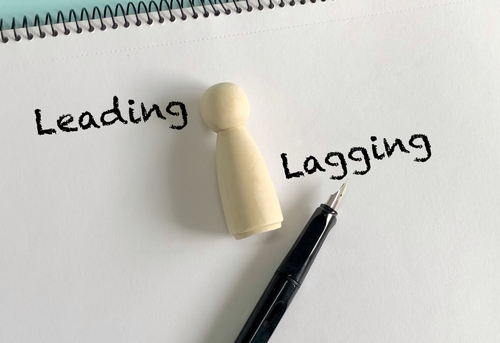
Most sales organizations are not data-poor. They are clarity-poor. Different teams interpret the same metrics differently. Leading indicators are buried beneath lagging reports. Dashboards expand, but shared understanding does not. When data does not drive aligned decisions, it becomes administrative overhead.
Why Performance Plateaus
As organizations grow, these five dimensions evolve at different speeds:
- Technology advances faster than leadership habits.
- Strategy shifts faster than operational processes adapt.
- Training happens faster than reinforcement structures mature.
- The result is friction.
- Friction absorbs performance.
Sales teams feel busy because they are. But the system around them does not consistently amplify their effort.
What High-Performing Sales Organizations Do Differently
Top-performing sales organizations treat sales not as a collection of initiatives, but as an integrated system. They:
- Establish strategic clarity before adding new tools.
- Align KPIs around a limited number of high-impact levers.
- Protect coaching time as a leadership priority.
- Reinforce learning within real deal cycles.
- Use data to create shared understanding, not internal debate.
When these dimensions reinforce each other, investments compound. When they operate in isolation, investments cancel each other out.
The Real Question
The question for sales leaders is no longer “What initiative should we launch next?” It’s “Does our sales system actually reinforce the performance we expect?”
Until that question is addressed, new investments will continue to produce incremental, not transformational, results.
Hard work isn’t the issue. Technology isn’t the issue. Budget isn’t the issue. Coherence is. And coherence is what separates sales organizations that continuously improve from those that are constantly trying.