

Tired of marketing that feels hollow? User-generated content (UGC) brings real voices into your campaigns and instantly raises credibility. This article shows how to capture genuine stories, reuse them across channels and measure real impact.
What Is UGC in B2B?
It’s any content that your customers create related to your brand or products. Here are some common types of user-generated content you can use in B2B marketing.
- Customer Reviews and Ratings – Star ratings and comments that highlight customer satisfaction
- Video Testimonials – Self-recorded clips where customers explain results or share success stories
- Product-in-Use Demos – Authentic clips of customers integrating the solution into daily workflows
- Case-Study Snippets – Mini-testimonials drawn from detailed case-study content
- Social Posts with Brand Hashtags – Organic posts where customers tag your brand to share experiences
- User-Created Tutorials – Instructional content made by real users for community benefit
- Industry Expert/Influencer Mentions – Endorsements or reviews from trusted sector voices (with proper disclosure)
How to Create Marketing Campaigns Using UGC
Here’s a step-by-step guide on how to use UGC for customer-facing marketing campaigns.
1. Define Campaign Objective and Format
The first step is to pick your campaign goal and a metric to track performance on that goal. Then pick the UGC format that best moves that metric.
Here’s a simple checklist:
- Objective: Write a one-line description.
- Primary KPI: Name one metric.
- UGC Formats: Short video (6–30s), demo clip (30–90s), quote card, review snippet, product-in-use photo.
- Channels: Paid social, product page, and email.
- Minimum Sample: Collect 8-12 assets to test variations.
2. Identify Where to Source UGC
Think about who already talks about your product – those are your best UGC partners. Customers who’ve just celebrated a win or a user who posted a clip using your product.
Match the source to the type of UGC you need:
- For short social clips: Happy customers and partners who already post on social.
- For credibility and industry context: Expert users or industry influencers who know your product in and out.
- For conversion-focused proof: Verified purchasers with quantifiable outcomes (CROs, product managers).
3. Use the Right Time and Way to Ask
If you want to collect UGC for B2B marketing campaigns, timing is important. When and how you ask determines whether someone will help you out or not. Here are some tips to help you collect UGC effectively.
- Ask right after a positive moment: delivery, successful install, pilot completion or a customer support win (within 24–72 hours).
- Be specific about what you want (length, orientation, format) and how it will be used.
- Provide an incentive, such as a feature, discount, entry to a prize or early access to a beta feature.
You don’t need paid tools to collect UGC, as something as simple as Google Forms will work.
Here’s a sample message you can use.
Hey [Name],
Saw your team just completed the rollout — huge congrats.
Would you be open to recording a 20–30s clip about how the install went? No edits needed.
If you’re up for it, we’ll credit you and share the final clip before publishing. Thanks!
It’s personal, timely and removes pressure by promising that they don’t need to put in too much effort.
4. Capture Permissions and Stay Compliant
When you request UGC, include a one-liner that the creator can accept (checkbox or reply). For example: “By uploading, you agree we can feature this clip on our website, social channels, and ads. We’ll credit you and send the final version.”
Here are some key actions you should take to avoid any legal issues.
- Capture a clear, time-stamped consent with every asset (one-click web form or email reply).
- Store consent files with the asset in your DAM/CRM and record metadata: submitter, date, campaign, rights granted.
- Have a simple revocation policy (e.g., “assets may be removed on request; previously published uses may continue”) and make it discoverable.
You can use this simple message template to get consent.
“Thanks for the clip!
Can you reply: ‘I confirm I own this content and grant [Brand] a royalty-free license to use it across marketing channels worldwide. — [Full name]’? Thanks!”
If you’re working with influencers, use a tool like SafeCollab by Popular Pays to ensure they follow brand safety guidelines.
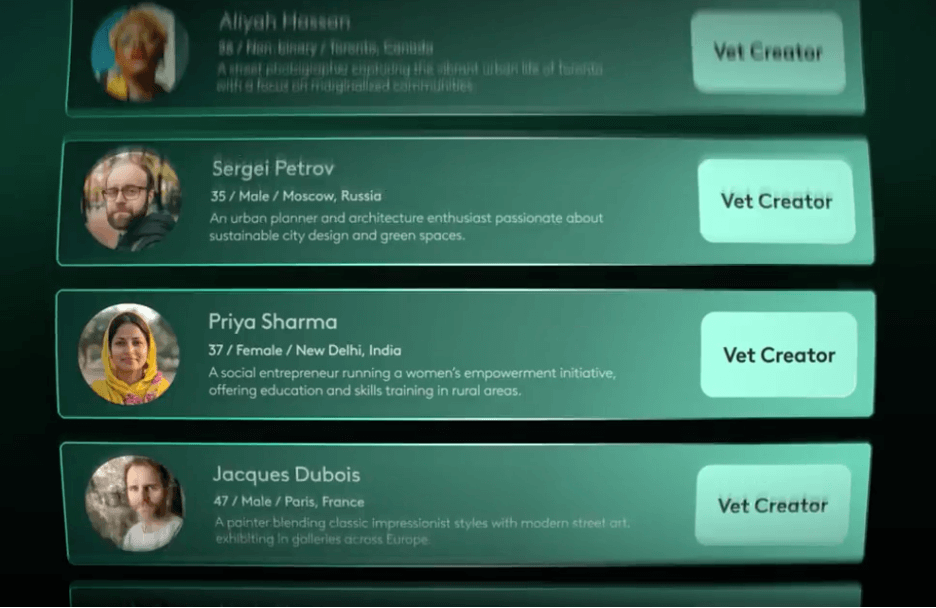
Instead of spending hours manually vetting each influencer, you can use this AI-powered scanning tool developed by Lightricks to find pre-vetted, trusted influencers whose content aligns with your brand values.
What’s more, you also get access to collaboration tools that help you run streamlined influencer campaigns at scale. So, if you want to collaborate with influencers safely, this is a must-have platform.
5. Curate and Prepare Assets and Templates
Collecting UGC is only half the battle. The next step is making it usable for marketing campaigns. Raw videos, screenshots or quotes often need a little editing to fit into your campaigns.
By curating the strongest pieces and packaging them into polished assets, you can make sure the content feels on-brand while still keeping the authentic voice of your customers. Here are some common types of UGC assets you can create for your marketing campaigns.
- Hero Social Clips: Snappy 15-second videos that stop the scroll and show real customers in action.
- Demo Videos: Slightly longer edits for product pages where buyers want more detail.
- Customer Quote Graphics: Easy-to-share images with a memorable line and attribution.
- Mini Ads: Six-second cutdowns that get straight to the core value.
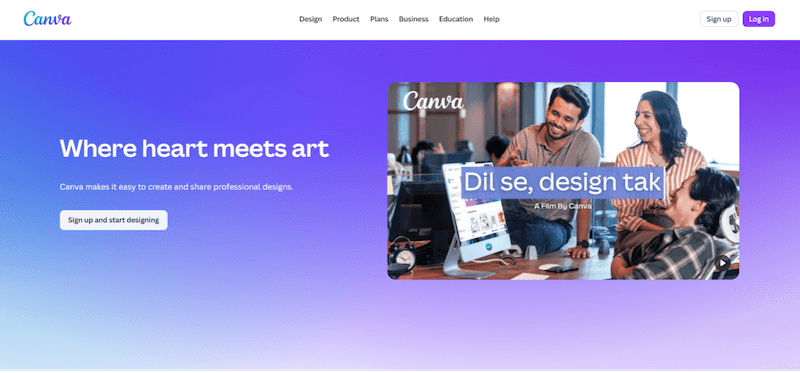
Use a tool like Canva to create these visual assets using user-generated content. It helps users create engaging visuals promptly for their personal and business campaigns.
Additionally, create reusable templates to continue using UGC for ongoing marketing campaigns, rather than just leveraging it once.
6. Use UGC on Various Channels
A great customer story shouldn’t live in one place. The key is to share it across multiple touchpoints, from social media content to social proof for your landing pages. This helps prospects see real people vouching for your product wherever they go. Think of it as giving your UGC a second (and third!) life.
Small edits and smart placement turn one asset into many wins. Here are some places where you can feature UGC to win more customers.
- Homepage and Features: Put testimonial snippets near benefits and CTAs to reinforce claims instantly.
- Organic Social: Turn customer quotes into social media posts, stories, or short reels — quick, relatable, and easy to engage with.
- Emails: UGC works across every format — newsletters, drip sequences, and even sales promos — giving your subscribers real proof that others trust you.
- Sales Enablement: Insert UGC into demo scripts, proposal decks, and follow-ups to back your claims.
- Advertisements: Replace staged ads with UGC to see better engagement and trust signals.
- Events and Webinars: Use attendee quotes and short videos in event promos or as social proof during live sessions.
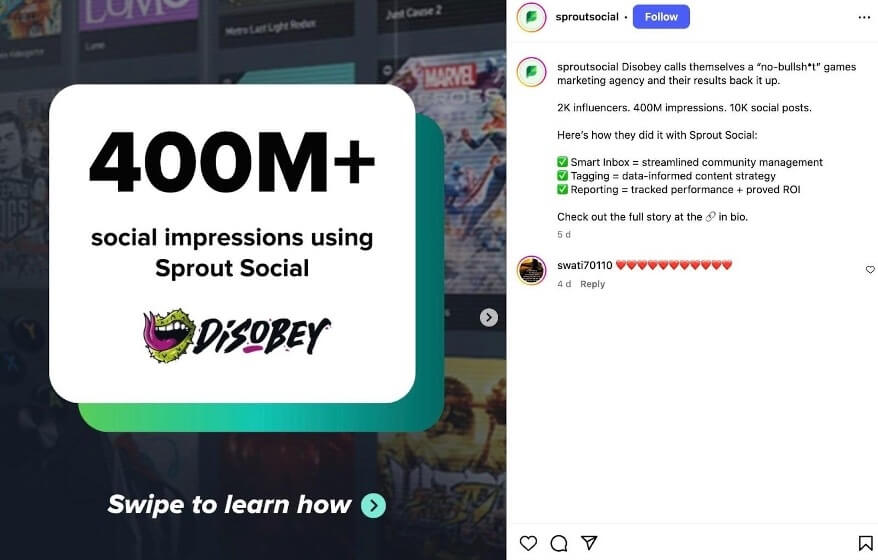
Here’s an example where Sprout Social has shared a client success story on Instagram.
7. Measure Performance and Improve
The last step in this guide on using UGC is to measure the performance of your UGC campaigns. Here are some metrics you can track using any social media analytics tool, such as Hootsuite.

Test different formats and channels and see what works best for your business. Then, scrap the ones that don’t work and focus more on the campaigns that do. Keep testing and improving your B2B marketing campaigns over time.
UGC is more than just content – it’s proof that real people trust your brand. Using it in consumer-facing marketing campaigns can get you more engagement and conversions.