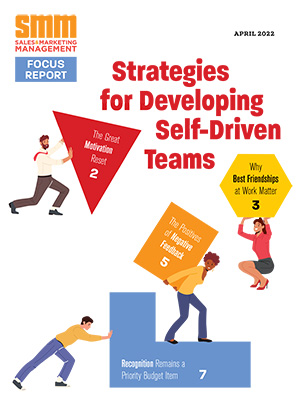


In July 2022, a 20-something New Yorker working a remote tech job posted a TikTok about a concept he discovered through a YouTube video regarding a trend called “quiet quitting.” Zaid Khan, the poster, explained that quiet quitters weren’t actually quitting their jobs, but rather “quitting the idea of going above and beyond.”
His video went viral, and within months, managers across the country – indeed, throughout the world – had a new concern atop their list of employee matters. “What if my workers aren’t motivated?”
Call them what you will – unenthusiastic, distracted, disengaged – lackluster workers have existed as long as there has been work itself. However, it is widely believed the COVID pandemic sparked widespread worker disengagement that many managers feel persists.
“The pandemic made me lazy and I got way too good at wasting time. I’m struggling to find my motivation again. Anyone else experiencing this?” reads the headline from a Reddit discussion thread from four years ago on the challenge to get motivated at work.
One poster replied, “Same! I have a full time [sic] job and I slack off so much. I feel guilty af but I can’t seem to get the will power [sic] to stop!”
In its “State of the Global Workplace 2025” report, Gallup stated that global employee engagement fell two points to 21% in 2024, costing the global economy $438 billion. It estimated a whopping $9.6 trillion in productivity could be added to the economy if the global workforce was fully engaged.
Harvard Business Review reported that one of the most significant fallouts of this deluge of disengagement was a commitment by corporate executives to ramp up employee recognition. In December, HBR reported that another Gallup survey indicated that the percentage of senior leaders who viewed recognition as a major strategic priority more than doubled between 2022 and 2024, from 19% to 42%.
Another sign that workplace recognition is being taken seriously – or at least more seriously than it was just a couple years ago – is the growth of the workplace recognition software industry. That market was valued at $11.1 billion in 2021 and is now estimated to be $38 billion.
A Hierarchy of Workplace Needs
To be sure, there is a Maslow-like hierarchy of needs in the workplace for employees to be happy and motivated in their job. A competitive salary and meaningful work top that list. Training that allows each worker to feel fully competent and capable of exceeding expectations is also essential. Next comes supportive management that can help identify a clear career path, whether that is within the same organization or somewhere else. Alongside that is a need to be appreciated and recognized.
Getting past a paycheck is what non-cash rewards have always been about. As the HBR article suggests, corporate leaders are increasingly aware that work must mean more than money in the pocket, yet despite increased efforts to show appreciation, workers still report feeling undervalued. A survey by Workhuman, a cloud-based human capital management software company, showed that 53% of employees feel either somewhat valued or not valued at all at work.
In its report on “why rewards go bad,” the Incentive Research Foundation (IRF) states that poor recognition and incentive program design is partly to blame for this lack of feeling appreciated. It’s a classic case of how doing something poorly can be more harmful than doing nothing at all. The IRF report identifies some common pitfalls of recognition programs:
-
An overreliance on cash and underappreciation of trophy value – Your employees may say “give me cash,” but it’s OK to ignore them. As long as you are paying a competitive salary, rewards of gift cards, merchandise or travel experiences produce memories and narratives that money can’t duplicate.
-
Too much of a gap between achievement and award – Psychologically, delayed rewards are heavily discounted. You can hold on to your annual President’s Club travel incentive, but be sure to offer smaller rewards along the way. And don’t neglect continual communication of “attaboys,” both formal and informal, throughout.
-
Crowding out intrinsic motivation – “If you overly control behavior with rewards, people can start working for the reward rather than for pride, purpose or learning,” an IRF report states. It recommends positioning incentives as recognition of contribution, not as coercive control.
-
Ignoring fairness and subjective judgment – The IRF’s Building a Culture of Recognition report underscores that perceptions of fairness, including clear criteria, broad eligibility and manager training, are central to recognition program effectiveness. Make eligibility rules and criteria explicit, and act decisively and visibly on inequities.
“Cognitive pitfalls are not bugs in your employees; they are features of human decision-making,” the IRF report states. “Incentive and recognition programs that ignore them will, at best waste money and at worst, erode trust and psychological safety.”
Recognition + Affirmation
A final word about the importance of telling people they are appreciated. Non-cash rewards are an effective tool for engendering employee satisfaction and loyalty. However, managers need to be aware that the reward itself, no matter how extravagant and memorable, cannot carry the load alone.
Zach Mercurio, a researcher and consultant on purposeful leadership, and the writer of the HBR article on the topic, says people feel most appreciated from a brief interaction with a leader who mentions their strengths, points out the downstream impact of their efforts, or reminds them how their everyday efforts are vital to the team’s success. He distinguishes between recognition and affirmation. The former can be conveyed through awards, while the latter is only delivered through personalized interaction. Both are necessary. One acts as a force multipliers of the other.
“The good news is that leaders can learn the interpersonal skills they need to deliver regular, valuable affirmation. It requires them to notice and name people’s unique gifts, show them the difference they make, and deliver meaningful gratitude that validates their distinct impact,” Mercurio writes.
“Remember, each time a leader offers someone clear evidence of their significance, they strengthen that person’s belief that they matter,” Mercurio adds. “And when people feel that they matter, they act like they matter. They engage, commit and stay.”